
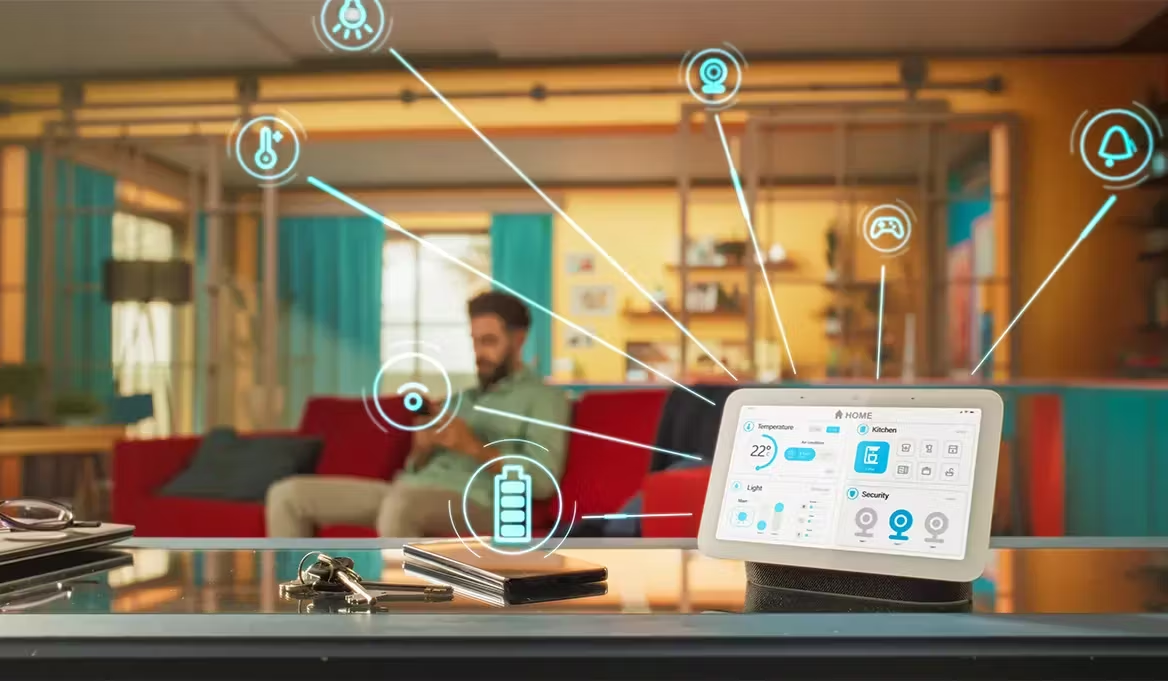
Setting up a smart home in Dubai requires careful planning and selection of the right technology. You’ll need to understand various smart devices, from lighting to security, and make sure they work together seamlessly. It’s crucial to take into account compatibility, user interfaces, and automation routines. As you explore these elements, you’ll uncover how to enhance your home’s efficiency and security, creating a living space that meets your modern needs. But where do you start?
Understanding Smart Home Technology
As you explore the world of smart home technology, it’s essential to understand how interconnected devices can enhance your living experience.
Smart home ecosystems create a seamless environment where devices communicate efficiently, improving convenience and energy management. By integrating various appliances—like lights, thermostats, and security systems—you can automate daily tasks, saving time and effort.
Voice control technology plays a pivotal role, allowing you to manage your devices hands-free. With simple voice commands, you can adjust lighting, set temperatures, or monitor security cameras, all while multitasking.
This integration not only simplifies your routine but also enhances the overall comfort of your home. By grasping these concepts, you’re well on your way to creating a more efficient and enjoyable living space.
Essential Devices for Your Smart Home
Choosing the right devices is essential for building an effective smart home ecosystem that meets your needs. Start with smart lighting solutions, such as LED bulbs that can be controlled via apps or voice commands. These offer energy efficiency and customizable ambiance.
Next, invest in a robust home automation hub, which acts as the central command for all your devices. This hub allows seamless integration of various systems and devices, enhancing convenience.
Consider smart thermostats for ideal climate control and security cameras for monitoring your home. Additionally, smart plugs can automate everyday appliances, adding functionality without major renovations.
Integrating Smart Devices Seamlessly
Once you’ve selected your smart devices, the next step is ensuring they work together seamlessly. Start by checking for device compatibility issues; not all devices communicate effectively with each other.
Utilize hubs that support multiple protocols like Zigbee or Z-Wave, which can bridge gaps between different brands. Pay attention to user interface design—an intuitive app can greatly enhance your experience.
Make sure your devices are controllable from a single interface to avoid confusion. Regularly update firmware to maintain compatibility and security.
Finally, consider automation routines that allow devices to interact based on triggers, such as time or sensor data, creating a cohesive smart home environment that responds to your needs effectively.
Enhancing Security With Smart Solutions
To enhance security in your smart home, it’s essential to integrate advanced solutions that work in harmony with your existing devices.
Start by installing smart locks on your doors, allowing you to control access remotely via your smartphone. These locks can offer features like temporary access codes for guests, ensuring you maintain control over who enters your home.
Next, consider adding security cameras that provide real-time video feeds and motion alerts. Many of these cameras come with night vision and cloud storage options for easy access to recorded footage.
Optimizing Energy Efficiency in Your Home
As you look to optimize energy efficiency in your smart home, incorporating smart thermostats and energy monitors can greatly reduce your utility bills. Smart thermostats allow for precise temperature control, adapting to your schedule and preferences. Coupling this with energy monitoring systems provides real-time data, enabling you to identify high-consumption appliances. Additionally, consider automated shading solutions, which adjust window coverings based on sunlight and time of day to minimize heating and cooling demands.
Here’s a quick reference table to guide your choices:
| Feature | Benefits | Recommendations |
|---|---|---|
| Smart Thermostats | Saves energy by optimizing heating/cooling | Nest, Ecobee |
| Energy Monitoring | Tracks usage patterns for informed decisions | Sense, Neurio |
| Automated Shading | Reduces heat gain/loss through window control | Lutron, IKEA FYRTUR |
Future Trends in Smart Home Living
The smart home landscape is rapidly evolving, and staying ahead of future trends can enhance both convenience and efficiency.
One major trend is the integration of artificial intelligence into everyday devices, allowing for personalized experiences. Envision your smart thermostat learning your preferences and adjusting automatically.
Automation integration is also becoming more seamless, linking various devices to work in harmony, enhancing security and energy management.
Voice-activated systems are gaining sophistication, making interaction more intuitive.
Additionally, you’ll see a rise in predictive analytics, where systems anticipate your needs based on usage patterns.
As these technologies become more affordable, you’ll likely see them widely adopted, transforming your home into a truly smart environment that adapts to your lifestyle effortlessly.