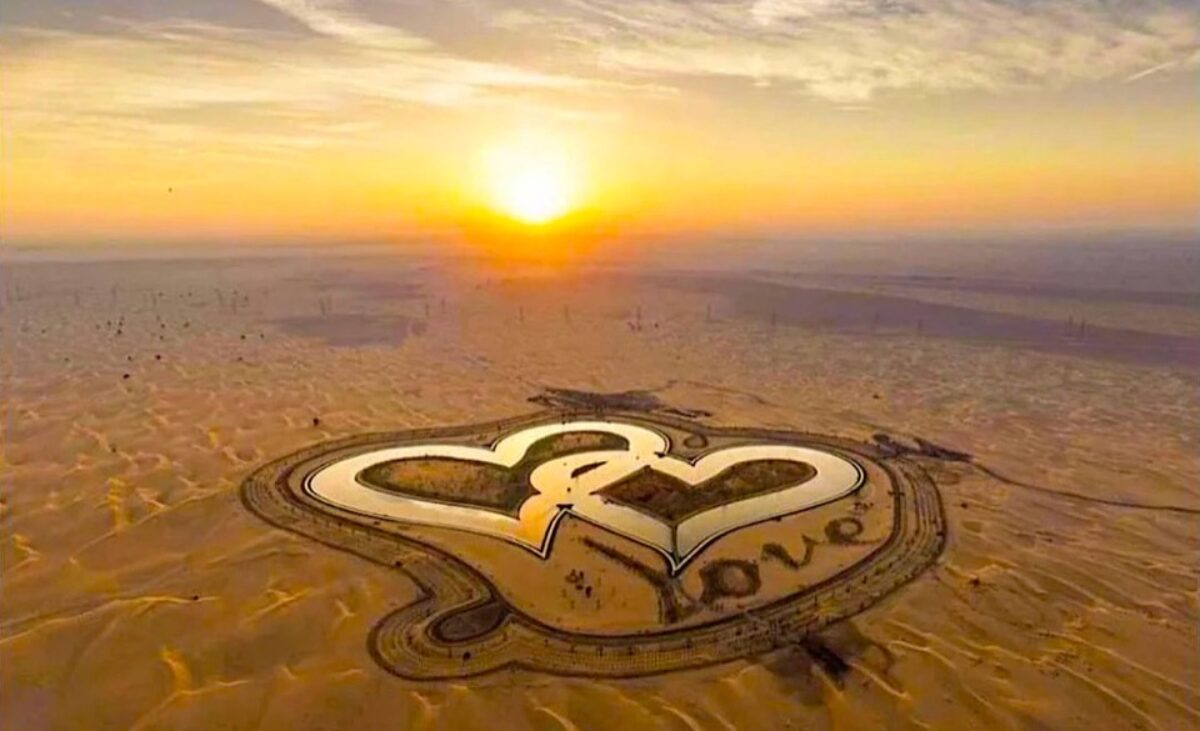
Two interlocking hearts carved into the desert, visible from space, sitting quietly in the Al Marmoom Desert Conservation Reserve about 40 minutes from your door. Love Lake Dubai is completely free, open 24 hours every day, and remains one of the few outdoor spots in the city where you can barbecue, camp, and watch flamingos without spending a single dirham. No tickets. No booking. No closing time. Just drive in, park for free, and walk straight onto the sand.
But it is also in the middle of nowhere — no cafés, no shops, no petrol stations nearby — and the experience changes dramatically depending on when you go. A Friday evening in January feels like a community festival. A Tuesday morning in July feels like you have the entire desert to yourself. This guide covers everything a resident needs to know to get the timing right, pack the right things, and avoid the mistakes that first-timers make.
What Love Lake Actually Is?
Love Lake Dubai opened in late 2018 as part of the Al Marmoom Desert Conservation Reserve, a protected area spanning over 40 hectares of desert landscape. The lake itself covers 550,000 square metres and consists of two large heart-shaped basins that interlock when viewed from above. Surrounding the water, over 16,000 trees, shrubs, and flowering plants have been planted — a deliberate green contrast against the sandy desert backdrop.
The detail that most photos miss: the pathways around the lake are arranged to spell out the word “LOVE” in plant formations. It is visible from the ground if you know where to look, and unmistakable from a drone. Sheikh Hamdan bin Mohammed, Dubai’s Crown Prince, first shared aerial images of the site on social media, and it has since become a fixture on every Dubai resident’s list of outdoor weekend spots.
The lake sits within the Al Qudra desert area, roughly 35 to 40 kilometres from central Dubai. It is part of the same ecosystem as the broader Al Qudra Lakes, which means the birdlife — flamingos, swans, ducks, and migratory species — moves between the different water bodies throughout the day. The Al Marmoom Reserve is home to over 170 bird species, and Love Lake is one of the best spots within the reserve to see them up close.
How to Get Love Lake?
Love Lake is a car-only destination. No public bus route reaches it, no Metro line comes close, and you cannot rely on a taxi to pick you up once you are there. If you do not drive, book a return trip through Careem or Uber before you leave — there is no dedicated taxi rank at the site, and mobile reception, while generally stable, can be patchy in the car park.
The drive takes roughly 40 to 50 minutes from Downtown Dubai. Head south on Sheikh Zayed Road (E11), exit onto Al Qudra Road (D63), and follow the signs toward Al Qudra Lakes. Google Maps will get you there — search “Love Lake Dubai” and it routes correctly. The final stretch is a compacted sandy track, not paved tarmac. A sedan can manage it, but the ride is bumpy, and a 4×4 or SUV is more comfortable. If you plan to explore beyond the main lake area, a 4×4 is strongly recommended.
The nearest petrol station sits roughly 15 to 20 kilometres from the lake. Fill your tank before you set off. There are no fuel stops in the immediate area, and the desert roads offer little shade if you run into trouble. The approach is well-signposted once you are within the Al Qudra area, so follow the brown tourist signs rather than relying solely on your phone.
Entry Fee & Opening Times
Love Lake Dubai is completely free. No entry fee. No parking charge. No ticket booth. You drive up, park, and walk in. That places it in a very small category of Dubai attractions — alongside the Dubai Fountain, Ras Al Khor Wildlife Sanctuary, and the public beaches — where the experience costs nothing at all.
The site is open 24 hours a day, seven days a week. There is no gate, no barrier, and no closing time. This is the key practical detail for residents: you can arrive at 5:00 AM for a sunrise walk, stay until midnight for stargazing, or camp overnight and leave the next morning. The flexibility is what makes Love Lake work as a genuine weekend escape rather than a timed attraction.
Things to Do at Love Lake
Walking and the Jogging Track
A 7-kilometre rubberised track circles the lake, purpose-built for walking, jogging, and cycling. The surface is smooth and well-maintained, comparable to the track at Kite Beach but with desert views instead of the sea. Distance markers are painted at intervals, and the route is flat with no inclines — accessible for all fitness levels.
Early mornings on the track are quiet. You will see a handful of runners and walkers, the occasional cyclist, and not much else. The track faces east-west, so sunrise walks light up the desert ahead of you and sunset runs cast long shadows across the sand beside you. Bring your own water — there are no drinking fountains along the route.
Picnics and Barbecues
Love Lake is one of the best picnic spots in Dubai, and the barbecue facilities are a major reason residents make the drive. Designated barbecue pits and picnic tables sit in shaded areas around the lake, with benches and waste bins placed at regular intervals. The setup is simple — stone pits, metal grills — but it works. Bring your own charcoal, food, and grilling tools.
Barbecuing is only allowed in the designated areas. Open camp fires on the sand or grass are prohibited and enforced. The site is a protected conservation reserve, and the rules around fire safety are taken seriously. Use the provided pits, clean up after yourself, and dispose of hot coals in the designated bins. Improper waste disposal can result in fines, and the site is monitored.
Bird Watching and Wildlife
Flamingos are the headline act. They gather in the shallows of the lake during winter months (October to March), sometimes in flocks of several dozen, their pink bodies stark against the green reeds and brown sand. Swans, ducks, and migratory birds also populate the water, and the surrounding desert supports gazelles and smaller mammals. Early morning and late afternoon are the best windows for bird activity. Bring binoculars if you have them — the viewing decks positioned around the lake give you elevated sightlines across the water.
Photography and Drone Use
Love Lake is one of the most photographed outdoor locations in Dubai, and the appeal is obvious. The heart shape, the desert backdrop, the flamingos, the sunrise reflections on still water — the visual material is strong. Ground-level photography works best at sunrise and sunset, when the light is warm and the shadows add depth to the landscape.
Drone photography captures the full heart shape from above, and the results are striking. However, drone use requires prior approval from Dubai authorities. Flying without a permit is not allowed within the Al Marmoom Reserve. If you plan to use a drone, secure the necessary permissions before you go. The process is handled through the Dubai Civil Aviation Authority.
Cycling
The Al Qudra Cycling Track runs near Love Lake, connecting to the broader network of desert cycling paths in the area. The 7-kilometre track around the lake is open to cyclists, and many residents bring their own bikes or rent from operators in the Al Qudra area. The terrain is flat, the track is smooth, and the desert scenery makes it a more interesting ride than the city cycling paths. Early mornings are best — the heat builds quickly after 9:00 AM, and there is limited shade on the track itself.
Camping at Love Lake
Overnight camping is permitted at Love Lake, and it is one of the best spots near Dubai for a quick desert camping trip. You can pitch a tent on the sand or on the grass areas beside the lake, and the site remains open through the night with no restrictions on staying until morning. The key advantage over wild desert camping is the facilities — restrooms and washrooms are available on site, which makes a significant difference for families and first-time campers.
The best camping months run from October to March, when overnight temperatures sit between 12°C and 20°C. Outside that window — especially from June to September — the desert retains heat well past midnight, and sleeping comfortably in a tent becomes difficult. Bring a good tent, sleeping bags rated for cooler desert nights, and more water than you think you will need. There are no shops within walking distance, and the nearest supplies are a 20-minute drive away.
Stargazing is a major draw for overnight visitors. The light pollution is low this far from the city centre, and on clear winter nights the Milky Way is visible to the naked eye. Bring a torch or headlamp for navigating the site after dark — there are no streetlights along the walking paths, and the desert gets properly dark once the sun goes down. A fully charged phone and a portable power bank are essential. Let someone know your plans before you head out, as the area is remote and mobile reception varies.
Facilities On Site
Love Lake has improved its facilities since opening, but it is still a desert site, not a serviced park. Free parking is available in a dedicated lot beside the lake entrance. The lot is large and rarely fills completely, though weekends in peak winter months see heavier traffic. Shaded seating areas, picnic tables, and barbecue pits are spread around the lake perimeter. Restrooms and washrooms are available and generally clean, though the number of toilets is limited relative to the size of the site — expect queues on busy weekend evenings.
There are no restaurants, no cafés, no food trucks, and no shops of any kind at Love Lake itself. Bring all your own food, water, and supplies. The nearest food option is Last Exit Al Qudra, approximately 10 kilometres from the lake along Al Qudra Road, which serves burgers, fries, and karak from food trucks. If you want anything beyond that, pack it before you leave Dubai. Drinking water is not available on site — bring several litres per person, more if you are camping or visiting in summer.
Are Dogs Allowed at Love Lake?
The answer is not straightforward. Love Lake sits within the Al Marmoom Desert Conservation Reserve, and as of 2026, the official position on dogs is mixed. Some visitors report being able to walk dogs at the site without issue. Other visitors report that dogs are no longer permitted and that signage at the entrance prohibits them. The policy appears to have shifted over time, and enforcement may depend on the day, the staff on duty, and how busy the site is.
What is clear: if you bring a dog, it must remain on a leash at all times. The site is a protected conservation area with ground-nesting birds, migratory species, and resident wildlife — off-leash dogs pose a genuine risk to the ecosystem. Clean up after your dog thoroughly, keep them away from the water where birds are feeding, and be prepared to be asked to leave if the current policy is being enforced. If a dog-friendly outdoor experience is non-negotiable for you, check the policy status through Dubai Municipality’s website or the Al Marmoom Reserve office before making the drive.
Rules and Regulations
- No open camp fires — barbecuing is only permitted in designated pits
- No swimming or entering the water
- Feeding birds or fish is prohibited
- Improper waste disposal can result in fines — use the bins provided and take excess rubbish home
- Drone photography requires prior approval from Dubai authorities
- Respect the wildlife and plant life — the site is a protected conservation reserve
- No loud music or disruptive behaviour — the site is a family space and the atmosphere is expected to remain calm
Best Times to Visit: A Resident’s Calendar
November to March (Peak Season)
This is the window that makes Love Lake worth the drive. Daytime temperatures sit between 20°C and 30°C. Evenings cool to 12°C to 18°C. The flamingos are present in large numbers. The sky is clear for stargazing. The grass areas are green and the overall atmosphere is at its best. Weekends are busy — the car park fills by late afternoon on Fridays and Saturdays, and the barbecue pits are claimed early. Arrive before 3:00 PM on weekends to secure a good spot. Weekdays are significantly quieter, and a Tuesday morning can feel like a private desert retreat.
April and October (Shoulder Season)
Daytime temperatures climb to 30°C to 38°C. Evenings are pleasant. Fewer flamingos are present, and the grass areas begin to brown. The site is less crowded than peak winter months. Mornings and late afternoons are the practical windows — avoid the midday hours when the heat is strongest. Camping is still comfortable in October; April nights are warm but manageable.
May to September (Summer)
Temperatures range from 38°C to 48°C during the day. The desert holds heat through the night, and camping is uncomfortable without specialised gear. The site is empty — you may be the only person there on a weekday. Visit at sunrise (5:30 AM to 7:00 AM) or after sunset. The stargazing remains excellent on clear summer nights, but the experience is brief before the heat becomes oppressive. Bring more water than you think you need, and do not rely on being able to stay longer than an hour or two.
Ramadan 2026 (February 17 – March 19)
The site remains open 24 hours during Ramadan. Daytime visits are very quiet. Evenings — especially after iftar — see a noticeable increase in visitors, and the atmosphere picks up significantly. Barbecue pits fill quickly after sunset. Dress modestly and be mindful of the season.
What to Bring: The Resident Packing List
- Water — several litres per person, more if camping or visiting in summer. There is no drinking water on site.
- Food — all meals, snacks, and drinks. The nearest food is 10 kilometres away at Last Exit.
- Charcoal, firelighters, and grilling tools if you plan to barbecue.
- Tent, sleeping bags, and camping gear if staying overnight.
- Torch or headlamp — the site has no streetlights and gets completely dark after sunset.
- Portable power bank — mobile reception varies, and you want a charged phone.
- Binoculars for bird watching.
- Camera — sunrise and sunset produce the best light.
- Warm layers — desert nights from November to March drop to 12°C, and the wind can make it feel colder.
- Sunscreen and a hat — there is limited shade, and the desert sun is strong even in winter.
- Rubbish bags — take your waste with you if the bins are full.
- Comfortable walking shoes — the sand and track are flat but you will cover distance.
Nearby Food Options: Last Exit Al Qudra
Last Exit Al Qudra sits roughly 10 kilometres from Love Lake along Al Qudra Road, and it is the only practical food stop near the site. The food truck park serves burgers, grilled meats, loaded fries, and karak — most items priced between Dhs20 and Dhs35. It is open day and night, with shaded outdoor seating and a petrol station adjacent.
The food selection is limited, mostly fast food, and the burger quality is decent but not remarkable. If you want a proper meal, prepare it at home and bring it with you. Last Exit works best as a backup — somewhere to grab a burger and a karak if you underestimated your hunger, or a clean washroom stop on the drive back to the city. The petrol station makes it a practical final fill-up point before heading into the desert.
Location: Al Qudra Road, near the Seih Al Salam desert area. Hours: Open day and night (food truck hours vary). Cost: Meals from Dhs20–35. Contact: 800 738245 (800 RETAIL).